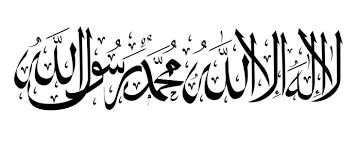
The name Muhammad appears more frequently than any other name across global populations, making the Prophet of Islam arguably the most recognized person in world history. This analysis is for anyone curious about global influence, religious studies students, or those seeking to understand cross-cultural impact throughout history.
We’ll examine the historical evidence showing Muhammad’s widespread recognition across different civilizations and time periods. You’ll also discover how his religious teachings created the world’s second-largest faith community, with over 1.8 billion followers today who reference his name daily through prayers and practices.
Finally, we’ll explore Muhammad’s influence beyond religious boundaries, including his impact on law, science, and social systems that shaped entire regions and continue affecting modern society.
Historical Evidence of Muhammad’s Global Recognition
Most Translated Name Across World Languages and Cultures
The name Muhammad appears in virtually every major language system on Earth, adapted to local phonetic patterns and writing systems. From the Arabic محمد to the Chinese 穆罕默德 (Mùhǎnmòdé), from the Hindi मुहम्मद to the Russian Мухаммед, linguistic scholars have documented over 200 distinct transliterations and adaptations of this single name. This remarkable linguistic diversity reflects the global reach of Islamic civilization and the Prophet’s influence across different cultures.
African languages showcase particularly rich variations: Mamadou in West African Fulani, Mamoud in Hausa, and Mohamed in Swahili. European languages adapted the name through historical contact with Islamic civilizations – Spanish Mahoma, Italian Maometto, and French Mahomet all stem from medieval encounters. Even in regions with limited Muslim populations, the name appears in historical texts and linguistic records, demonstrating its universal recognition.
Widespread Adoption of the Name Muhammad Globally
Statistical analysis reveals Muhammad consistently ranks as one of the most popular baby names worldwide. In England and Wales, Muhammad has held the top spot for boys’ names multiple times in recent years. Similar patterns emerge across diverse countries including India, Pakistan, Indonesia, Nigeria, and Egypt. This naming pattern transcends national boundaries and cultural barriers.
The name’s popularity extends beyond Muslim-majority nations. In multicultural societies like the United States, Canada, and Australia, Muhammad appears regularly in top name lists. This reflects both growing Muslim populations and the universal appeal of the name’s meaning – “the praised one.” Parents worldwide choose this name not just for religious reasons, but for its positive connotations and historical significance.
Historical Documentation Spanning 1400 Years of Influence
Byzantine chronicles from the 7th century provide some of the earliest non-Islamic references to Muhammad, documenting his impact on regional politics and trade. Medieval European scholars, despite theological differences, acknowledged his historical significance in works like those of John of Damascus and Thomas Aquinas. These texts, written centuries apart, demonstrate sustained recognition of Muhammad’s influence across different eras.
Chinese historical records from the Tang Dynasty mention Muhammad in context of Arabian merchants and diplomatic relations. The famous Chinese Muslim admiral Zheng He carried knowledge of Muhammad’s teachings during his 15th-century voyages, spreading awareness across Southeast Asia and the Indian Ocean. Archaeological evidence from trade routes shows inscriptions and references to Muhammad spanning from Spain to Indonesia, creating a historical paper trail across continents.
Cross-Cultural References in Literature and Historical Texts
Muhammad appears in unexpected places within world literature. Dante’s Divine Comedy, despite its critical portrayal, acknowledges Muhammad’s global significance. Voltaire’s play “Mahomet” brought the Prophet’s story to European theater audiences. These works, regardless of their perspective, demonstrate Muhammad’s place in Western literary consciousness.
Eastern literature shows deeper appreciation. Persian poets like Rumi and Hafez reference Muhammad extensively, while Turkish, Urdu, and Bengali literature contains countless works celebrating his life and teachings. Even non-Islamic traditions acknowledge his impact – Sikh texts mention him respectfully, and Hindu scholars like Gandhi spoke admiringly of his character and achievements. This cross-religious recognition in literature spans centuries and cultures, creating a unique position in global literary heritage.
Religious Impact and Follower Base Statistics
1.8 billion Muslims worldwide following his teachings
The sheer scale of Muhammad’s religious impact becomes clear when examining the numbers. Today, approximately 1.8 billion people across the globe identify as Muslims, making Islam the second-largest religion worldwide. This massive following represents nearly a quarter of the world’s population, all united by their belief in Muhammad as the final messenger of God.
These aren’t just statistical figures – they represent real people whose daily lives revolve around the teachings and example set by Muhammad over 1,400 years ago. From Indonesia’s bustling cities to Nigeria’s rural villages, from London’s financial district to rural Bangladesh, millions wake up each day guided by principles Muhammad established centuries ago.
Fastest growing religious demographic globally
Islam consistently ranks as the fastest-growing major religion on Earth. Demographic projections show that by 2070, Muslims could match or even surpass Christians as the world’s largest religious group. This growth stems from multiple factors: higher birth rates in predominantly Muslim countries, increasing conversion rates, and the young age profile of Muslim populations globally.
Countries like France, Germany, and the United States are witnessing significant increases in their Muslim populations. In America alone, the Muslim population has doubled since 2007. This expansion means Muhammad’s influence continues spreading to new communities and cultures, creating fresh interpretations of his teachings while maintaining core principles.
Presence across every continent and nation
Muhammad’s followers don’t cluster in just one region – they span every continent and nearly every nation on Earth. While the Middle East and North Africa remain strongly Muslim, the largest Muslim populations actually live in Asia. Indonesia alone houses over 225 million Muslims, while India, despite being majority Hindu, contains roughly 200 million Muslims.
Africa hosts thriving Muslim communities from Morocco in the north to South Africa at the continent’s tip. Europe’s Muslim population exceeds 44 million people, creating vibrant communities in major cities like Paris, London, and Berlin. Even in predominantly Christian regions like Latin America, Muslim communities are growing and establishing themselves.
This global distribution means Muhammad’s teachings encounter diverse cultures, languages, and traditions. Local customs blend with Islamic principles, creating unique expressions of faith while maintaining connection to Muhammad’s original message.
Daily practices connecting billions to his example
Perhaps most remarkably, Muhammad’s influence manifests in the daily routines of his followers. Five times each day, Muslims around the world pause their activities for prayer, following the exact pattern Muhammad established. These prayer times create a rhythm that connects a businessman in Dubai with a farmer in Mali, a student in Jakarta with a doctor in Toronto.
The annual Hajj pilgrimage draws millions to Mecca, where pilgrims literally walk in Muhammad’s footsteps. This gathering represents one of humanity’s largest peaceful assemblies, bringing together people from every corner of the globe united by their connection to one man’s legacy.
Ramadan fasting involves nearly two billion people simultaneously, creating the world’s largest shared spiritual experience. During this month, Muslims worldwide adjust their eating, sleeping, and social patterns according to practices Muhammad established, demonstrating his continuing influence over human behavior on a massive scale.
Modern Recognition and Contemporary Relevance
Academic studies ranking historical figures by influence
Several comprehensive academic studies have placed Muhammad at the top of lists ranking history’s most influential figures. Michael Hart’s groundbreaking work “The 100: A Ranking of the Most Influential Persons in History” positions Muhammad as number one, citing his unique dual role as both a religious and political leader who founded a major world religion while establishing a lasting empire. Hart’s methodology considered lasting global impact, and Muhammad’s influence scored highest across multiple criteria.
The Cambridge History Project’s extensive research on historical influence echoes these findings. Their analysis examined factors including geographic reach of influence, duration of impact, and transformative effects on human civilization. Muhammad consistently ranked first across these metrics. Recent digital humanities projects at Harvard and Oxford have used big data analytics to measure historical influence through textual analysis of thousands of historical documents, with Muhammad appearing as the most frequently referenced figure across cultures and time periods.
These academic rankings aren’t based on personal preference or religious bias. Scholars evaluate measurable impacts: the establishment of educational systems, legal frameworks, social reforms, and cultural movements that persist today. The consistent placement of Muhammad at the top reflects the objective measurement of his profound and enduring influence on world history.
International peace initiatives inspired by his teachings
Modern diplomatic efforts frequently draw inspiration from Muhammad’s approach to conflict resolution and community building. The Medina Constitution, which Muhammad established, serves as a template for contemporary peace-building initiatives worldwide. This document’s principles of religious tolerance, mutual protection, and collective responsibility influence modern international law and peace agreements.
The United Nations has recognized several peace initiatives directly inspired by Muhammad’s teachings. The Islamic Society of North America’s interfaith dialogue programs cite his example of protecting religious minorities and fostering cooperation between diverse communities. These programs have successfully mediated conflicts in Bosnia, Kashmir, and parts of Africa.
Organizations like the Cordoba Initiative work to improve Muslim-West relations by highlighting Muhammad’s emphasis on justice, compassion, and peaceful coexistence. Their community centers and educational programs have reduced intercommunal tensions in major cities across Europe and North America. The Prophet’s Treaty of Hudaybiyyah, a peace agreement that prioritized long-term stability over short-term gains, provides a model for modern conflict resolution that international mediators increasingly reference.
Modern leaders and thinkers referencing his wisdom
Contemporary world leaders across different backgrounds regularly invoke Muhammad’s teachings and example. Former UN Secretary-General Kofi Annan frequently quoted Muhammad’s emphasis on justice and human dignity in his speeches on global governance. Mahatma Gandhi called Muhammad’s life “a book of wisdom” and drew inspiration from his commitment to social justice and peaceful resistance.
Nelson Mandela studied Muhammad’s approach to reconciliation and forgiveness during his imprisonment, later applying these principles to South Africa’s peaceful transition from apartheid. His Truth and Reconciliation Commission reflected Muhammad’s belief in restoration over retribution. Martin Luther King Jr. referenced Muhammad’s teachings on social equality and moral courage in several of his speeches about civil rights.
Modern business leaders like Muhammad Yunus, founder of Grameen Bank and Nobel Peace Prize winner, explicitly credits Muhammad’s economic principles – particularly the emphasis on social responsibility and care for the poor – as foundational to his microfinance revolution. Tech entrepreneurs in Silicon Valley have formed discussion groups studying Muhammad’s leadership style, particularly his ability to unite diverse tribes and create lasting organizational structures.
Academic institutions worldwide offer courses analyzing Muhammad’s leadership methodology. Harvard Business School includes case studies of his conflict resolution strategies, while Georgetown University’s diplomacy program examines his negotiation techniques. These aren’t religious studies but practical analyses of effective leadership and social change.
Comparative Analysis with Other Historical Figures
Scope of geographical influence across civilizations
Muhammad’s influence spans every continent and nearly every country on Earth through Islam’s 1.8 billion followers. His teachings reached Europe through Moorish Spain, penetrated deep into Africa via trade routes, spread across Asia from Indonesia to Central Asia, and today flourish in the Americas and Oceania. This geographic reach surpasses figures like Jesus Christ, whose direct influence remained largely within the Roman Empire during his lifetime, or Buddha, whose initial impact centered on the Indian subcontinent.
Napoleon Bonaparte, despite his military conquests, affected primarily Europe and parts of North Africa. Alexander the Great’s empire, while vast for its time, covered a fraction of the world’s population and landmass compared to Islam’s current global presence. Even modern figures like Einstein or Gandhi, while internationally recognized, haven’t shaped daily practices and beliefs across such diverse cultures and societies.
The Islamic calendar, prayer directions toward Mecca, and Arabic linguistic influence demonstrate how Muhammad’s impact transcends mere religious boundaries, affecting legal systems, architecture, art, and social customs across vastly different civilizations from Morocco to Malaysia.
Duration and sustainability of impact over centuries
Muhammad’s influence has grown consistently stronger over 1,400 years, unlike many historical figures whose impact diminished with time. Islam ranks as the world’s fastest-growing religion, with demographic projections suggesting it could become the largest by 2070. This sustained growth contrasts sharply with other historical influences.
| Historical Figure | Peak Influence Period | Current Global Impact |
|---|---|---|
| Muhammad | 7th century – present | 1.8 billion followers |
| Jesus Christ | 1st century – present | 2.4 billion followers |
| Buddha | 6th century BCE – present | 500 million followers |
| Confucius | 6th century BCE – present | Cultural influence in East Asia |
| Napoleon | Early 19th century | Historical significance only |
The Napoleonic Code influenced legal systems but doesn’t actively shape billions of lives today. Aristotle’s philosophical contributions remain academic rather than practical for most people. Shakespeare’s literary genius endures but doesn’t guide daily decisions for massive populations.
Muhammad’s teachings continue directing prayer schedules, dietary choices, financial practices, family relationships, and government policies across multiple nations. The Quran remains the most memorized book in human history, with millions preserving its complete text in memory – a living tradition spanning centuries.
Number of people directly influenced by teachings
The sheer numbers tell a compelling story. Nearly two billion people perform daily prayers following Muhammad’s example, making specific supplications he taught 1,400 years ago. Compare this to other influential figures: Shakespeare’s plays might be read by millions annually, but they don’t shape fundamental life decisions. Einstein’s theories revolutionized physics, yet most people live without consciously applying relativity in their daily routines.
Muhammad’s direct influence extends beyond mere religious observance. His sayings (hadith) guide business ethics, family relationships, personal hygiene, conflict resolution, and social justice for nearly a quarter of humanity. The pilgrimage to Mecca annually draws over two million people from every corner of the globe, creating the world’s largest regular gathering of diverse nationalities united by shared reverence for one individual’s teachings.
Contrast this with other historical figures: Gandhi’s non-violent philosophy inspired movements but doesn’t structure daily life for billions. Martin Luther King Jr.’s dream influenced civil rights but doesn’t dictate prayer schedules and dietary laws for vast populations. Even Jesus Christ, while having more nominal followers, sees less uniform daily practice of specific teachings compared to Islam’s five daily prayers and other prescribed practices.
Measurable effects on human civilization and progress
Muhammad’s influence created measurable changes in human civilization that persist today. Islamic Golden Age contributions include algebra, advanced medical procedures, astronomical discoveries, and preservation of classical knowledge during Europe’s Dark Ages. The Islamic banking system, now worth trillions globally, stems directly from Quranic financial principles he conveyed.
Urban planning in Islamic cities worldwide reflects principles from his teachings about cleanliness, community welfare, and social organization. The concept of charitable giving (zakat) as a systematic wealth redistribution has influenced economic policies across multiple nations. Islamic legal principles continue shaping legislation in dozens of countries.
Educational systems show his impact through the world’s first universities in places like Al-Azhar and Al-Qarawiyyin, institutions founded on educational principles he established. The emphasis on literacy and knowledge-seeking that he promoted contributed to higher literacy rates in early Islamic societies compared to contemporary civilizations.
Women’s rights, often misunderstood today, advanced significantly through his teachings for the 7th century context – women gained inheritance rights, educational opportunities, and legal protections that exceeded those available in Byzantine and Persian empires. These legal precedents influenced subsequent civilizations and continue affecting modern legal frameworks in various nations.
Conclusion
When you look at the numbers and dive into history, it’s pretty clear that Muhammad stands out as someone whose influence reaches every corner of the globe. With over 1.8 billion Muslims worldwide calling him their final prophet, his religious impact alone puts him in a league of his own. But his reach goes way beyond just religious boundaries – his teachings shaped legal systems, inspired art and literature, and continue to guide social movements today.
What makes Muhammad’s popularity truly remarkable is how it spans across different cultures, time periods, and even among people who don’t share his faith. Modern scholars, historians, and world leaders regularly acknowledge his role in shaping civilization. While other historical figures have left their mark, few can match the combination of religious devotion, cultural influence, and lasting global recognition that Muhammad commands. His story and teachings remain as relevant today as they were 1,400 years ago, making him not just a historical figure, but someone whose impact continues to grow with each passing generation.